





Media Library

Documentary, graphic and/or audiovisual knowledge objects are offered here, offering information on various sectors and topics. Use the keyword search or search filters to access current audiovisual and documentary knowledge objects useful for your implementation.

If you have any questions or suggestions, please contact us here.

ECOGAN Livestock Profile User Manual - Fattening Cattle

It is a computerized system developed by the Ministry of Agriculture, Fisheries and Food in coordination with the Ministry for Ecological Transition and Demographic Challenge, which allows the registration of the Best Available Techniques (BATs) applied on the farm, as well as estimating the polluting and greenhouse gas emissions and the consumption of resources of a specific farm throughout th

ECOGAN PORCINE FAQ DOCUMENT

This document is entirely non-binding and serves solely as a working tool to facilitate a better understanding of the regulations applicable to the subject matter, as well as their harmonized application.

ECOGAN Swine Livestock Profile User Manual

Farm owners are responsible for estimating their emissions and implementing Best Available Techniques (BAT) to avoid or, where this is not possible, reduce emissions and their impact on the environment. They are also responsible for notifying the relevant authorities of the implementation of these techniques.

Code of good environmental practices for beef cattle

Code of good environmental practices for beef cattle to help the sector reduce its emissions

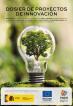
Dossier of supra-autonomous innovation projects

Inventory of innovative projects implemented by supra-regional operational groups of the European Innovation Partnership for agricultural productivity and sustainability of the National Rural Development Programme (PNDR) 2014-2022, submeasure 16.2.

The 2024 Annual Report of the European Network of Forest Extension Organizations (FOREXT)

Annual report of the European Network of Forestry Extension Organisations (FOREXT) with information on training activities for private forest owners to improve forestry extension services across Europe

Operational Groups in Catalonia. Call for 2018

"Technical Dossier No. 123: “Operational groups in Catalonia. Call 2018” is dedicated to the Operational Groups developed within the framework of the CAP Strategic Plan (PEPAC 2023-2027), and taking into account the Agricultural Knowledge and Innovation Systems, also known as AKIS (Agricultural Knowledge and Innovation System).

Grups operatius a Catalunya. Call 2018 (Catalan)

The Technical Dossier no. 123: “Grups operatius a Catalunya. Call 2018” is dedicated to the Groups Operatius developed within the framework of the CAP Strategic Plan (PEPAC 2023-2027), and includes the Agricultural Knowledge and Innovation Systems, also linked to AKIS (Agricultural Knowledge and Innovation System).

Recommendations for Composting Horticultural Remains.

One of the possibilities for managing and recovering plant waste is composting, minimizing transportation and processing costs to obtain a product that improves the soil's physical and chemical properties. Compost has great fertilizing value and improves the soil's water retention capacity. It also reduces leaching and the environmental impact on aquifers.

Ten years of applying alperujo compost in olive groves

The results of a ten-year study are presented, during which different mixtures of olive oil compost were applied to olive groves. The influence on the improvement of soil fertility and fruit oil yield was evaluated.

Inorganic Waste Management in Intensive Horticulture

Horticulture in southeastern Andalusia covers an area of 31,173 ha (Junta de Andalucía, 2020), which implies a dispersed generation of a large volume of agricultural waste.

Management of vegetable plant debris by chopping and incorporating it into the greenhouse soil

The generation of plant waste is an unresolved environmental and social problem in horticulture under plastic. Its concentrated generation in spring and autumn, as well as its spatial dispersion, makes its management difficult.

Strategies for sustainable nitrogen fertilization

Diffuse nitrate pollution from agricultural activities has been identified as one of the main causes of the poor condition of both surface and inland water bodies, as well as groundwater.

Foliar Application of Wine By-Product Extracts on Grapes Grown in Warm Climates: Initial Results

Today, the demands of the agricultural sector are directed toward the search for non-toxic, natural, and useful active substances for the protection or stimulation of crops grown under unfavorable conditions, such as those found in warm climates. Spain leads the world in terms of cultivated vineyards.

Evaluation of the Use of Horticultural Waste Compost in Tomato Cultivation

Among the problems generated by the greenhouse production system and which can limit its sustainability, the high annual production of crop residues (1,751,242 t/yr-1) stands out, the accumulation of which constitutes a serious environmental problem.

Efficiency of Nitrogen Fertilization of a Raspberry Crop in Huelva

This paper presents the results of a fertigation trial conducted on a remontant raspberry crop in the province of Huelva. The effect of different nitrogen (N) doses on yield was evaluated, and plant and fruit nitrogen uptake was characterized. The nitrogen applied in a two-harvest campaign, including that present in the irrigation water and top dressing, ranged between 213 and 346 FU ha-1.

Composting of Plant Remains from Extensive Crops and Fruit Trees in Andalusia

This paper presents the initial results of the "CompostAnd" project, which addresses the sustainable management of plant residues from extensive and fruit crops typical of Western Andalusia. It justifies the need for composting as a response to various problems facing the agricultural sector, transforming it into an economic and environmental opportunity.

The Quality of Organic Plant Products: An Updated Review.

This document analyzes published scientific information on the quality of organic products versus conventionally grown products from a health perspective, focusing specifically on how the cultivation system influences the antioxidant and vitamin content of the most commonly grown fruits and vegetables in Andalusia.

Utilization of bunch-thinning grapes for the production of an extract enriched with bioactive stilbenes

In grape cultivation, the utilization of by-products is an important factor for sustainable production. One of these by-products is the grapes from the thinning of red grape bunches, which are normally discarded.

Obtaining quality compost from plant waste. Experience with the "CompostAnd" project

This document describes composting as a sustainable solution for improving soil health and managing agricultural waste. It explains the process, from the proper mixing of materials to compost maturation, highlighting the importance of carbon/nitrogen balance, aeration, and moisture and temperature control.